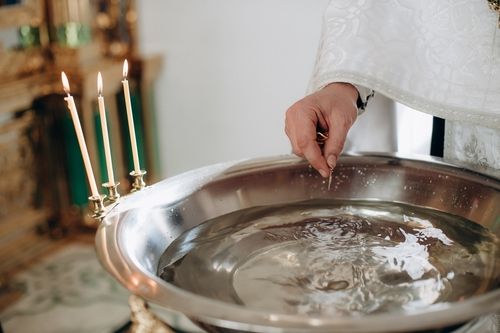
 Baptism is a significant ritual in Christianity, symbolizing spiritual cleansing and rebirth. Different Christian denominations practice baptism, but they do not all agree on its meaning, method, or the appropriate age for recipients. This article explores how various Christian traditions understand and perform this sacred rite.
Catholic Beliefs
In Catholicism, baptism is considered a sacrament that washes away original sin, marking the first step in a lifelong journey of faith. Catholics typically baptize infants to welcome them into the Christian community and free them from the original sin they believe all humans are born with. Water is a key element in the ceremony, where the priest pours water over the child's head while saying, "I baptize you in the name of the Father, and of the Son, and of the Holy Spirit." This act is seen as so essential that, in emergencies, anyone—even someone who is not Catholic—can baptize another, as long as they intend to perform the baptism as the Church does and use the traditional formula.
Orthodox Christianity Perspective
The Orthodox Church shares similar views with the Catholic Church regarding the importance of baptism as a sacrament for the remission of sins and entrance into the Church. However, Orthodox Christians typically immerse babies three times in sanctified water rather than pouring. This full immersion symbolizes death and resurrection with Christ. After baptism, Orthodox Christians immediately perform the sacrament of Chrismation, where the child is anointed with holy oil, signifying the gift of the Holy Spirit.
Protestant Views
Protestant beliefs about baptism vary widely. Many mainline Protestant denominations, such as Lutherans and Anglicans, practice infant baptism and view it similarly to Catholics and Orthodox Christians, though often with less emphasis on its role in cleansing original sin. Instead, they see baptism more as a pledge of God's faithfulness to His people, regardless of age.
In contrast, Baptists and many other evangelical groups believe in "believer's baptism," which means that only those who have consciously and personally accepted Christ as their Savior should be baptized. This is almost always done through full immersion, which they believe better corresponds to biblical descriptions of baptism. For these groups, baptism does not confer grace by itself but is an outward symbol of inward conversion and a public declaration of faith.
Methodist and Presbyterian Practices
Methodists and Presbyterians practice both infant and adult baptism but focus more on baptism as a sign of God's prevenient grace—His grace that works in our lives before we are aware of it. These denominations use methods ranging from sprinkling, pouring, or immersion, depending on the tradition of the local congregation or the preferences of participants.
Pentecostal and Charismatic Beliefs
Pentecostals and Charismatics emphasize the experience of being born again through baptism. They typically practice full immersion and believe that it should be followed by an emotional spiritual experience, such as receiving the gifts of the Holy Spirit. For these groups, baptism is about personal commitment and a visible entry into a community of believers.
Christian Science and Quaker Perspectives
Some groups, like Christian Scientists and Quakers, take different approaches. Christian Scientists generally do not practice baptism with water, seeing it as a purely spiritual event that involves cleansing the mind from sinful thoughts. Quakers also do not practice baptism in a traditional sense, arguing that all of life is sacred and that, therefore, every act can be an act of worship and commitment to God.
Baptism is a complex and multifaceted practice within Christianity. While the theological nuances may vary, the core idea of baptism as a transformational act—signifying a new beginning and a clean slate—is a common thread that binds many Christians around the world. As such, it continues to be a vital and powerful symbol of faith, commitment, and community in the Christian tradition.
Add Your Comment