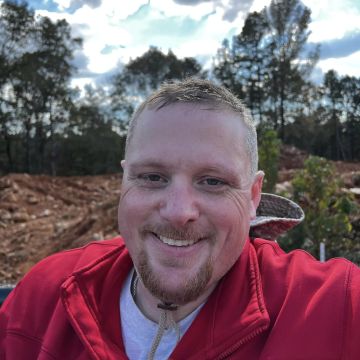
Mark Hanley
Ordained Minister in Waukesha, Wisconsin
Why did you originally become an ordained minister online?
I originally became ordained through the Universal Life Church because I wanted a way to formally honor and support people in their most meaningful life moments — weddings, blessings, transitions — without the rigidity or exclusion that can sometimes come with organized religion.
My background includes both traditional faith experiences and a strong connection to spiritual healing work, especially Reiki. Reiki taught me that the Divine isn’t bound to one denomination or set of rituals, but flows freely wherever there is openness, compassion, and love. Becoming ordained gave me a way to blend that perspective with service to others in a way that feels authentic and inclusive.
I deeply respect organized religion, but I also recognize that it doesn’t always fit every person or every couple. Some people feel closest to God outside of church walls — through relationships, nature, or spiritual practices that aren’t tied to a single tradition. I see my role as creating sacred space that honors those connections, while still grounding the ceremony in God’s blessing and presence.
For me, ordination wasn’t about taking on a title — it was about creating a bridge. A bridge between tradition and individuality, between faith and spirituality, and between people who want a meaningful ceremony but don’t feel fully at home in one particular denomination.
Where are you from?
I was born and raised on the south side of Milwaukee, in a very conservative Lutheran household. Faith and tradition were a strong part of my upbringing, and for many years I followed that path closely.
As I grew into adulthood, I began to make my own spiritual decisions independent from my family’s faith. That exploration gradually drew me toward a more universal view of God and spirituality — one that honors Christian roots but also recognizes that people connect with the Divine in many different ways.
That shift opened me to practices like Reiki, where I experienced firsthand how healing, compassion, and spiritual presence can move across traditions and reach people outside of church walls. For me, “where I’m from” is both Milwaukee and that Lutheran foundation — but also this larger, more inclusive perspective that I’ve embraced as part of my life’s calling.
What do you hope to achieve with your online ordination?
chose online ordination because I wanted a path to serve people spiritually without the barriers that often come with traditional institutions. My hope with ordination isn’t to build a church or enforce doctrine, but to create space for people who want God at the center of their lives and milestones without feeling pressured into a denomination that may not fit them.
For me, this is about access and authenticity. I’ve seen too many people feel excluded by organized religion — not because they lack faith, but because their lives don’t line up neatly with institutional expectations. Online ordination allows me to meet people where they are, honor their beliefs, and still offer sacred recognition of the moments that matter most: marriage, blessing, healing, and transition.
My background in Reiki shaped this path as well. Reiki teaches that Divine energy flows universally — it doesn’t belong to one tradition, church, or hierarchy. I see my ordination as a way to be a vessel for that same openness and healing, but in the language of ceremony, blessing, and community.
Ultimately, I hope to achieve three things with my ordination:
Serve inclusively — to create ceremonies and blessings that honor faith while respecting personal truth.
Bridge traditions — to help people find common ground between backgrounds, like Catholic and Lutheran, or spiritual and secular.
Bring healing into sacred moments — to weave in presence, compassion, and even energy work when appropriate, so ceremonies don’t just mark a day, but transform it.
Religious Affiliations
Christianity, Deism, Illuminati, Intelligent Design, New Age, New Thought, Spiritualism, Universal Life Church
Additional Information
I grew up in a very conservative Lutheran household, which gave me a strong foundation in faith and tradition. As I entered adulthood, I began to make my own spiritual decisions, and over time I found myself drawn toward a more universal view of God — one that honors my Christian roots but isn’t confined to one denomination.
Part of that journey has included Freemasonry, where I’ve been able to explore faith, morality, and service through symbolism and fellowship. I’ve also studied Spiritualism, which has broadened my perspective on how the soul and spirit connect beyond traditional religious frameworks. Both of these influences have deepened my appreciation for the many ways people seek meaning and connection with the Divine.
In addition, my practice as a massage therapist and Reiki practitioner has reinforced for me that healing, presence, and touch can be sacred in themselves. I see massage not only as physical therapy but also as a way to minister care, compassion, and peace — an extension of spiritual service.
Altogether, these paths — Lutheran roots, Freemasonry, Spiritualism, and healing work — have shaped my approach as a minister. I strive to create space that is inclusive, compassionate, and grounded in God’s love, while respecting that each person’s spiritual journey may look different.
What do you think makes your ceremonies special as a Waukesha, WI wedding officiant?
What makes my ceremonies special is the way I work to truly personalize them. I don’t believe in cookie-cutter scripts — I see every ceremony as a reflection of the couple’s unique story, their values, and the kind of marriage they want to build.
A few things couples often tell me they appreciate:
Listening First – I take time to understand your backgrounds, your faith perspectives, and your hopes for the ceremony. That way, the service doesn’t just sound like a wedding, it feels like your wedding.
Inclusive, Faith-Rooted Approach – Because I was raised in a conservative Lutheran family but later broadened into a more universal spiritual view, I can hold space for both tradition and openness. Whether couples come from different denominations, or want God at the center without being tied to one church, I can create a ceremony that honors both.
Blending Ceremony with Presence – My background in Reiki and healing work shapes the way I approach officiating. I strive to bring a sense of peace, grounding, and sacredness into the space. Couples often say the ceremony felt calm, centered, and meaningful — not just rushed through.
Guidance Without Pressure – I provide ceremony templates, vow suggestions, and reading options, but always leave space for you to make it your own. My role is to guide and support, not to dictate.
At the heart of it, what makes my ceremonies special is that they’re designed to be authentic, inclusive, and memorable — a true reflection of your love, blessed in the presence of God, family, and community.
Types of Service Offered
Marriages, Same-Sex Marriages, Renewal of Vows, Handfastings, Funerals, House Blessings, Spiritual Healing, Premarital Counseling, General Ministry, Spiritual Guidance
Additional Information
Beyond officiating weddings, I see my role as a minister as being about presence and service. For me, ministry isn’t limited to ceremonies — it’s about helping people mark life’s transitions with meaning, intention, and a sense of blessing.
That can take different forms, such as:
Pre-marital guidance – creating space for couples to talk about their values, communication styles, and spiritual connection before the wedding day.
Life blessings – offering ceremonies for milestones like vow renewals, house blessings, or even new beginnings after difficult seasons.
Healing work – drawing on my background in Reiki, I sometimes offer energy work and prayer for couples or families who want an added layer of grounding and peace before or after big life events.
Funeral and memorial services – helping families celebrate and honor the life of a loved one in a way that feels personal and faith-rooted, even outside traditional church structures.
What ties all of these together is my belief that not everyone finds a perfect home in organized religion. My ordination allows me to serve people who still want God present in their lives and ceremonies, but in a way that feels inclusive, personal, and real.