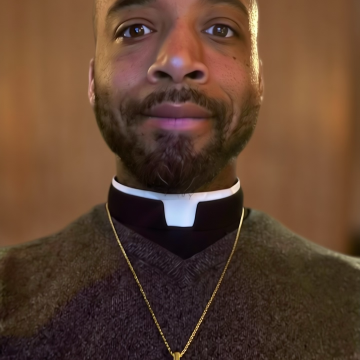
Rev. Jacob C. Lewis
Ordained Minister in York, Maine
Why did you originally become an ordained minister online?
I originally became an ordained minister online because I wanted to lead as many people to Jesus Christ as possible and build a church that creates meaningful, lasting value in the community. For me, ordination was not about obtaining a title; it was a step toward a greater purpose: reaching people, bringing them together, serving their needs, and helping build God’s Kingdom through faith expressed in action.
## A Purpose Beyond a Title
My intention was to make myself available for a life of ministry—not simply to speak about faith, but to help people experience its meaning through encouragement, compassion, and consistent service. Becoming ordained online was a starting point, not the completion of that commitment. I want to continue growing in biblical understanding, spiritual maturity, accountability, and the ability to serve others responsibly.
I do not want the significance of my ministry to rest on a certificate or on what people call me. I want it to rest on whether people encounter the love of Christ through the way I lead, listen, teach, and care for them. To me, the responsibility matters far more than the recognition.
## Leading People to Christ
At the center of my purpose is a desire to help people develop a genuine relationship with Jesus Christ. I want to reach those who have never known Him, those who are searching for meaning, and those who have drifted away from their faith or feel disconnected from the church.
My vision is rooted in the biblical call to make disciples and in the emphasis on equipping believers for service and spiritual growth found in Matthew 28:19–20 and Ephesians 4:11–16.[1]
For me, that means more than inviting someone to a service or encouraging a single decision. It means walking alongside people as they ask questions, learn, face difficulties, and discover how to live out their faith. I want to help build a ministry where people are not simply counted as attendees, but known, supported, and encouraged to grow.
## Outreach Beyond Church Walls
I want outreach to be a central part of the church’s identity, not an occasional activity. My goal is to reach people where they are—in their neighborhoods, workplaces, homes, and everyday circumstances—rather than waiting for them to come through a church door.
That includes creating space for people who feel overlooked, isolated, discouraged, or uncertain about whether they belong. I want our approach to be welcoming and sincere: listening before assuming, building relationships rather than applying pressure, and offering care without making assistance conditional on someone’s willingness to attend church.
I want the message of Christ to be communicated through both our words and our actions. When we offer practical help, keep our commitments, and treat people with dignity, I want that service to reflect the faith we profess.
## Creating Lasting Community Value
My vision is to build a church that becomes a dependable source of hope and support for the surrounding community. I want it to be a place people can turn to not only for worship, but also for connection, encouragement, and help during difficult seasons.
As resources and qualified partnerships allow, that could include food assistance, mentoring, support for families, opportunities for young people, companionship for older adults, and referrals to appropriate professional services. I want these efforts to respond to actual community needs—not simply to what looks impressive or brings attention to the church.
When I say I want to create the most value possible, I mean making the greatest responsible contribution we can with the resources entrusted to us. I would want to ask continually: Are we helping people? Are we following through? Are we strengthening relationships? Are we using our time, money, and abilities in ways that genuinely benefit others?
## Unification Through Shared Purpose
Another important part of my motivation is the desire to bring people together. I want to help build a church where differences in background, income, age, or life experience do not prevent people from being treated with dignity and finding meaningful fellowship.
Ephesians 4 connects Christian unity with humility, patience, love, and the shared work of building up the body of Christ.[2]
That is the kind of unity I want to cultivate—not a demand that everyone have identical experiences or perspectives, but a commitment to seek Christ together and serve one another faithfully. I want people to learn how to listen, forgive, cooperate, and work toward something greater than their individual interests.
I also want to approach other churches and community organizations as potential partners rather than competitors. Wherever cooperation can responsibly advance our mission and serve our neighbors, I want to build bridges.
## Kingdom Building, Not Self-Promotion
When I speak about Kingdom building, I am not talking simply about constructing a building, growing an organization, or expanding my own influence. I am talking about helping people know Christ, develop their gifts, serve their neighbors, and become capable of encouraging others in turn.
I want to build a church that equips people rather than making everything dependent on one leader. My hope is to develop a community of believers who take ownership of the mission—people who mentor, teach, volunteer, lead responsibly, and carry their faith into everyday life.
That also means pursuing growth with integrity. I want the ministry to be grounded in sound teaching, transparent stewardship, appropriate safeguards, and accountable leadership. I would rather build something trustworthy and enduring than something large that loses sight of its purpose.
## The Legacy I Want
Ultimately, I became ordained because I wanted to devote myself to something bigger than personal success. I want to help create a community where people find Christ, discover belonging, receive support, and become a source of hope for someone else.
The legacy I hope to leave is not simply that I founded a church or held the title of minister. It is that people were loved well, families were strengthened, neighbors were served, and others were equipped to continue that work.
My purpose is to lead people to Christ, unite them in faith and service, and build a church whose presence makes a lasting difference in the community—not for my recognition, but for God’s glory.
Where are you from?
On October 30, the Lord brought me into this world at Malden General Hospital, born to Robert and Stephanie Lewis. My story began in Tewksbury, Massachusetts, where my family lived during my earliest years. Although my journey has taken me through many communities and several states, my roots are firmly planted in New England.
As I approached my elementary school years, my family moved to South Berwick, Maine. We later settled in the neighboring town of Eliot, which became home throughout an important part of my upbringing. When I think about where I am from, I think not only of my birthplace, but also of those Maine communities and the years that helped form the foundation of my life.
A Journey Beyond Home
After high school, I took time to travel, explore, and experience different places to live. My journey included the area outside Philadelphia, Pennsylvania; Portland, Kittery, and Bangor, Maine; Naples, Brandon, Clermont, and Ocala, Florida; and Indianapolis, Indiana. Other chapters brought me to Richmond, Maine; Dover, New Hampshire; West Newfield, Maine; and York, Maine.
Those places are more than a list of addresses in my story. They represent different seasons of exploration and opportunities to consider where I belonged, what I wanted to build, and how I wanted to contribute. Looking back through the lens of my faith, I see that journey as part of a larger story that I am still growing into.
Roots, Faith, and Purpose
When someone asks where I am from, the simplest answer is that I was born in Massachusetts and raised in southern Maine. The fuller answer includes the places I have lived since then and the perspective I bring with me from that journey.
I do not want my identity to be defined only by geography. I want it to be reflected in my faith, my character, and my willingness to serve wherever the Lord places me. My roots matter to me, but so does the responsibility to make a meaningful contribution to the community I call home.
As I consider my purpose in ministry, I want to remember that every person has a story that extends beyond what we first see. A hometown, a move, a new beginning, or a search for belonging can be an important part of that story. I want to approach people with the patience to listen and the humility to understand, rather than assuming that their path should look like mine.
Ultimately, I am from Massachusetts by birth, southern Maine by upbringing, and a journey that has carried me through many different places.Wherever I call home, my desire is to put down roots through service, build meaningful relationships, and help others discover that they have a place, a purpose, and people willing to walk alongside them.
What do you hope to achieve with your online ordination?
Through my online ordination, I hope to lead as many people to Jesus Christ as possible and build a ministry that creates meaningful, lasting value in the community. I want ordination to be a starting point for faithful service—not simply a title, but a commitment to share the Gospel, bring people together, and put Christ’s love into action.
Building a Place of Belonging
My goals with my Ordination is to help create the kind of community where people can find both spiritual direction and genuine belonging. I want it to be a place where longtime neighbors and newcomers alike are welcomed, where people can grow in their relationship with Christ, and where faith leads to practical care for others.
That purpose connects with the heart of the ministry vision we have been developing: leading people to Christ, strengthening families, serving the community, and trusting God as the source of provision.[1]
## Reaching People With Hope
My greatest hope is to help people come to know Jesus and develop a genuine, growing relationship with Him. I want to reach those who have never explored faith, those who are searching for purpose, and those who feel distant from God or disconnected from the church.
I hope to do that through honest conversations, biblical teaching, prayer, and compassionate outreach. Rather than simply inviting people to attend a service, I want to walk alongside them—to listen to their questions, encourage them through difficulties, and help them discover how faith can shape their everyday lives.
## Building a Christ-Centered Ministry
I hope to build a church where people grow spiritually, families are strengthened, and neighbors receive meaningful care—consistent with the ministry’s vision of proclaiming the Gospel and serving the community with faith and compassion.[1]
I envision a ministry that reaches beyond its walls and becomes a dependable presence in people’s lives. I want people to find a community where they are welcomed, treated with dignity, and encouraged to discover their God-given gifts and purpose.
My goal is not simply to establish an organization. It is to help develop a community of believers whose faith is visible in how they live, serve, and care for one another.
## Meeting Needs Through Service
I hope to connect spiritual encouragement with practical support. As the ministry develops and resources allow, I want to pursue outreach that responds to real needs, whether through food assistance, mentoring, family support, companionship, or partnerships with qualified community organizations.
I want our service to communicate that people matter, regardless of their circumstances or willingness to attend church. Assistance should be offered with compassion and respect, not used as leverage to obtain a religious response.
For me, creating community value means being useful, trustworthy, and consistent. I want our neighbors to know that we will listen carefully, make responsible commitments, and follow through.
## Bringing People Together
I hope to use my ministry to build bridges across differences in background, age, income, and life experience. I want to cultivate a place where people can find belonging without feeling that they must hide their struggles or have every question answered before they arrive.
That also means working cooperatively with other churches and community organizations where our purposes align. I want to focus less on competition and more on what we can accomplish together to serve people well.
## Equipping Others to Lead
My hope is not to build something that depends entirely on me. I want to help others grow into disciples, volunteers, mentors, and servant leaders who can carry the work forward.
To me, Kingdom building means helping people know Christ and equipping them to reflect His love wherever they are—in their homes, workplaces, neighborhoods, and relationships. The impact I hope to achieve extends beyond church attendance to people becoming a source of encouragement and service to others.
## Growing Into the Responsibility
I recognize that ordination alone does not provide all the knowledge, maturity, or preparation that ministry requires. I intend to keep learning, deepen my understanding of Scripture, seek wise counsel, and develop accountable leadership practices.
I want to serve with humility, maintain appropriate boundaries, and recognize when someone needs support from a qualified professional. My hope is to earn trust through faithful conduct rather than assume that a ministerial title automatically grants it.
Ultimately, I hope my online ordination becomes the beginning of a lasting life of service—leading people to Christ, uniting them in love, strengthening the community, and equipping others to advance God’s Kingdom. I want the measure of that work to be the people served and the good carried forward, not the recognition I receive.
Religious Affiliations
Baptists, Christianity, Universal Life Church
What do you think makes your ceremonies special as a York, ME wedding officiant?
The time and care put into getting to tknow the bride and groom and their friends and families. The attention to detail and the small details beforee the day.
Types of Service Offered
Marriages, Renewal of Vows, Handfastings, Baptisms, Funerals, Christenings, House Blessings, Exorcisms, Spiritual Healing, Premarital Counseling, General Ministry, Spiritual Guidance