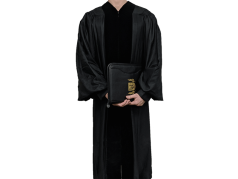
Ben Craig
Ordained Minister in West Sussex, England
Why did you originally become an ordained minister online?
I originally became an ordained minister because I wanted the opportunity to support people during some of the most important moments of their lives. I believe ceremonies such as weddings, vow renewals, funerals, and celebrations of life should feel personal, meaningful, and centred on the people involved rather than following a one-size-fits-all approach.
Becoming ordained gave me the ability to create and lead inclusive ceremonies that reflect each person’s story, values, and wishes. For me, it has always been about bringing compassion, professionalism, and a calm presence to occasions that matter deeply to individuals and families.
Where are you from?
Originally from the low lands of Scotland, I have lived many years in England
What do you hope to achieve with your online ordination?
One of the things I feel particularly passionate about is supporting people who are in hospital or facing the end of their life. Sometimes simply being there, listening and ensuring that someone does not feel alone can be incredibly important.
I understand that many people, myself included, can travel through much of life without a strong religious belief or connection to a particular faith. However, when faced with serious illness or the end of life, some people naturally begin to explore questions of faith, spirituality, meaning and what may come next.
Through my ordination, I hope to help bridge that gap. I want to be someone who can sit alongside a person without judgement or expectation, whether they want to pray, talk about faith, reflect on their life, share their fears, or simply have someone present with them.
I don’t want to impose religion on anyone. I want to offer compassion, dignity and human connection, while being able to provide spiritual support when someone asks for it. If I can bring even a little comfort or peace to someone at one of the most vulnerable points in their life, that would make my ordination incredibly meaningful to me.
Religious Affiliations
Universal Life Church
Additional Information
I consider myself a non-denominational minister. I do not feel that my ministry needs to be defined by one particular denomination, church or rigid interpretation of faith.
My own relationship with faith has not always followed a traditional religious path, and I believe that actually helps me understand people who may feel disconnected from organised religion but still have a sense of spirituality, belief or curiosity about something greater than themselves.
I have enormous respect for established faiths, their traditions and the comfort they bring to millions of people. My approach is not to compete with those traditions or suggest that they are interchangeable. Instead, I want to provide an inclusive form of ministry for people who may otherwise feel that conventional religious support is not for them.
I believe faith can be deeply personal. Two people may use the same word — God, faith, spirituality or prayer — while understanding it in completely different ways. I don’t believe it is my role to tell somebody that their understanding is wrong simply because it differs from mine.
This is particularly important when supporting somebody who is seriously ill, approaching the end of life or experiencing bereavement. I would never want a person to feel that they suddenly have to become “religious” before they are entitled to spiritual comfort. If someone who has never attended church suddenly wants to pray, ask questions about God or talk about what might happen after death, they should have a safe and compassionate person with whom they can explore those thoughts without judgement or pressure.
Equally, if somebody does not believe in God at all, I can still sit beside them, listen to their story, acknowledge their fears and help them reflect upon the meaning, relationships and experiences that have shaped their life.
My ordination therefore represents something very simple to me: being available to people.
I want to stand alongside people of faith, people without faith and those somewhere in between. I will always respect the beliefs of the individual before me and recognise when their particular faith or circumstances mean that support from a minister or leader within their own religious tradition would be more appropriate.
I don’t believe ministry is about having all the answers. Sometimes it is about having the humility to listen to the questions.
Above all, I want my ministry to be recognised for compassion, inclusion, dignity and respect — creating a space where people can explore faith and meaning on their own terms, without ever feeling that something is being imposed upon them.
What do you think makes your ceremonies special as a West Sussex, ENG wedding officiant?
What makes my wedding ceremonies special is that they are centred entirely around the couple and their story.
As an ordained minister and wedding officiant in the UK, I am transparent that I cannot legally register or certify a marriage. Couples will need to complete the legal requirements separately through the appropriate registrar or authorised religious venue. What I can provide, however, is something very different – a truly personal and meaningful wedding ceremony.
Separating the legal formalities from the ceremony gives couples much greater freedom. Your ceremony can reflect who you actually are, rather than being dictated by a standard format. It can be traditional, modern, spiritual, non-religious or a combination of these. We can incorporate personal vows, readings, music, family members, memories, humour, symbolic rituals or elements of faith that have particular meaning to you.
My role is to get to know you, understand your journey together and create a ceremony that sounds and feels like you. I want your guests to laugh with you, perhaps shed a tear, and leave feeling that they have witnessed something genuinely personal.
My approach is particularly suited to couples who may not consider themselves religious but still want their wedding to have a sense of occasion, meaning and spirituality. Equally, I can sensitively incorporate religious elements for couples or families where faith is important.
The paperwork may make you legally married, but your ceremony is the moment when you stand in front of the people who matter to you and make your promises to one another. My job is to make that moment unforgettable.
Types of Service Offered
Same-Sex Marriages, Renewal of Vows, Funerals, Christenings, General Ministry
Additional Information
The most important thing I would want people to understand about the services I bring as a minister is that my ministry is about the person in front of me, not about imposing my own beliefs upon them.
I do not see ministry as turning up in a dog collar with a Bible in my hand and assuming that I already know what somebody needs. I see it as turning up as a human being first — ready to listen, to understand and to meet that person exactly where they are in their life.
For some people, faith has been an important part of their lives for many years. For others, religion may have played little or no part at all. Some may believe in God but feel uncomfortable with organised religion. Others may describe themselves as spiritual rather than religious, be uncertain about what they believe, or simply have questions that they have never previously felt the need to ask.
I believe all of those positions deserve equal respect.
My role is not to bring somebody my faith. It is to help them explore, express or reconnect with theirs.
That becomes particularly important when somebody is seriously ill, approaching the end of life, grieving, frightened or experiencing one of the major transitions of life. At those moments, questions that may have felt distant suddenly become very real: What has my life meant? Have I been a good person? What happens next? Will the people I love be okay? Is there something beyond this life? Can I find peace with things that have happened?
Those questions do not always need theological answers. Sometimes they simply need somebody who is prepared to sit with them.
I want to provide that presence.
If someone wants prayer, I can pray with them. If they want to talk about God, faith or an afterlife, I will explore those things with them. If they simply want to talk about their family, their memories, regrets, achievements or fears, then that conversation is equally meaningful. And if they do not want to talk at all, there can also be value in simply having another person quietly beside them.
I would never want somebody to feel that spiritual support comes with conditions. There should be no expectation that they adopt a particular belief, denomination or interpretation of faith in order to receive compassion.
Where somebody already follows a particular religious tradition, I would respect that tradition and, where appropriate, help them connect with the specialist religious or pastoral support that best meets their needs. I recognise the limits of my own role. Being a minister does not mean pretending to have every answer; sometimes good ministry is knowing when somebody needs an imam, priest, rabbi, chaplain, counsellor, healthcare professional or another person with particular expertise.
The same philosophy runs through the ceremonies I offer. Whether I am supporting a wedding, vow renewal, funeral, memorial, celebration of life, blessing or another important occasion, I want to understand the people involved before deciding what that ceremony should look like.
A funeral for somebody who never practised religion should not suddenly become a heavily religious service simply because they have died. Equally, somebody who finds comfort in prayer or scripture should have those beliefs honoured. There is a huge space between completely secular and traditionally religious ceremonies, and many people find themselves somewhere within it.
That is the space in which I believe I can make a real difference.
I want to help people find language for things that can sometimes be difficult to express — love, loss, hope, forgiveness, gratitude, fear, spirituality and meaning.
Ultimately, I see ministry less as standing in front of people preaching and much more as standing beside people when life matters most.
I will not arrive carrying an expectation of what someone should believe.
I will arrive ready to discover what they believe, what matters to them and what they need from me in that moment — and then do everything I reasonably can to bring them comfort, dignity, meaning and human connection.